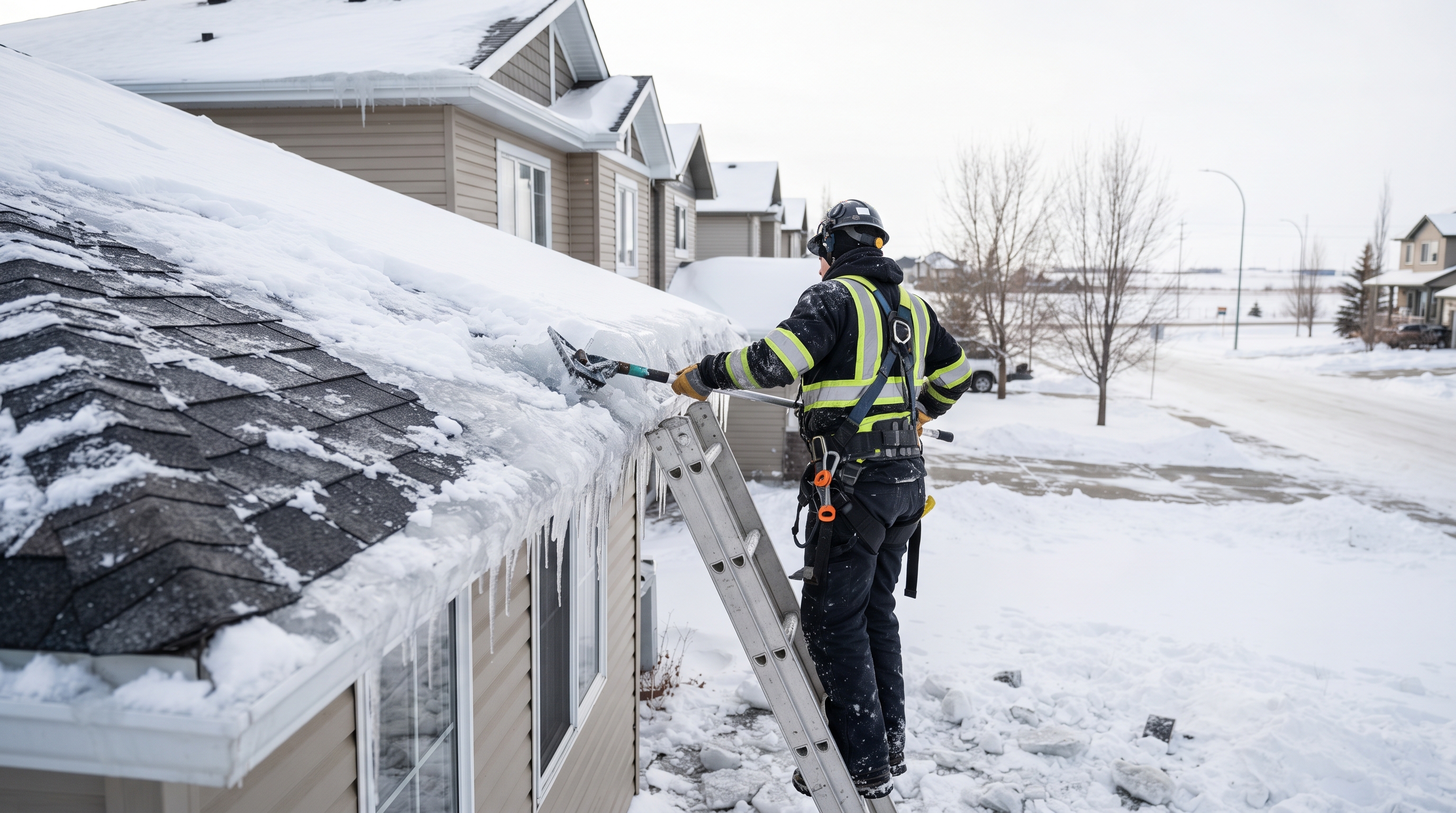
If you have lived through a Parkland County winter, you know what ice dams look like. That thick ridge of ice hanging off the eave, sometimes growing into a curtain of icicles three feet long, looks almost decorative until you spot the water stain spreading across your ceiling in February. By then the damage is already done.
Ice dams are not a roofing quirk or bad luck. They are a symptom of a specific heat-and-cold relationship between your living space, your attic, and the outdoors. Once you understand what is actually happening up there, the fix becomes obvious. The problem is that most homeowners in the Stony Plain and Spruce Grove area either ignore them or chip at the ice without ever addressing the root cause.
This article explains exactly why ice dams form in Parkland County conditions, what they do to your roof system, and what a proper fix looks like. We will keep the numbers real and skip the vague advice.
What Makes Parkland County Especially Vulnerable
The Parkland County climate is hard on roofs in a specific way. Daytime temperatures in January and February regularly swing from -20C overnight to just above -5C or even 0C during sunny afternoons. That freeze-thaw cycle, repeated dozens of times each winter, is the engine behind ice dam formation.
[Environment Canada historical climate data for Stony Plain](https://climate.weather.gc.ca/) shows that the Edmonton metro area, which includes Spruce Grove and Stony Plain, averages over 130 frost-cycle days per year. That is a lot of melt-and-refreeze opportunity on your roof.
Add in the fact that many Parkland County homes are older bungalows and bi-levels with shallow attic spaces that were never designed to meet modern insulation requirements, and you have a region with a higher-than-average ice dam risk.
The Exact Mechanism: Why Ice Dams Form
Here is the physics in plain terms. Your living space generates heat. If your attic is poorly insulated or poorly ventilated, that heat rises into the attic and warms the underside of your roof deck. The snow sitting on top of the warm roof deck begins to melt, even when the outdoor air temperature is well below zero.
That meltwater runs down the slope toward the eave. But the eave overhangs beyond the exterior wall, so it stays close to the actual outdoor air temperature. The meltwater hits that cold zone and freezes. Over several days of this cycle, the ice ridge builds up. It forms a dam. New meltwater backs up behind it, sits on your roof, and looks for a way in.
Water is patient. It will find the smallest gap in a shingle lap, a nail hole, or an open seam and migrate into your roof deck, your insulation, and eventually your ceiling drywall.
The key point: the dam itself is not the primary problem. Warm attic air is.
What Ice Dam Damage Actually Looks Like
By the time most homeowners call a roofer, the damage is layered. Here is a realistic picture of what ice dams cause in Stony Plain and Spruce Grove homes:
- Saturated batt insulation in the attic that has lost most of its R-value
- Stained or bubbling drywall on upper-floor ceilings near exterior walls
- Rot beginning in the roof deck plywood near the eave line
- Lifted or cracked shingles where the ice physically separates them
- Fascia and soffit damage from the weight of accumulated ice
- Mold growth behind drywall if the moisture problem went undetected through a full heating season
The interior damage often costs more to repair than the roof itself. That is why catching ice dams early matters. If you suspect water entry, a [roof repair assessment](/services/roof-repair) before spring can save you from a gut renovation.
The Real Fix: Attic Ventilation and Insulation
Cutting the ice off the eave with an axe or a heat cable is managing a symptom. The actual fix works from the inside out.
Step 1: Stop heat from reaching the roof deck.
The attic floor needs to be air-sealed and insulated to current Alberta Building Code minimums. The [Alberta Building Code](https://www.alberta.ca/building-codes-and-standards) requires a minimum of RSI 8.6 (roughly R-49) for attic insulation in Climate Zone 7, which covers most of Parkland County. A lot of homes built before 2000 in Stony Plain and Spruce Grove are sitting at R-20 to R-28. That shortfall is doing real damage every winter.
Air sealing matters as much as insulation value. Pot light penetrations, attic hatch frames, and plumbing stack penetrations are common thermal bypass points that let warm air bypass even a deep layer of insulation.
Step 2: Ventilate the attic properly.
A cold roof is a healthy roof. Proper soffit and ridge ventilation allows outdoor air to flush through the attic space and keep the roof deck at or near the ambient air temperature. Without it, even a well-insulated attic can build up enough heat to generate meltwater.
The standard ventilation ratio is 1 square foot of net free area for every 150 square feet of attic floor. Many older homes in the area are significantly under-ventilated. Blocked soffit vents, inadequate ridge vents, or insulation baffles that were never installed are the usual culprits.
Ice and Water Shield: The Last Line of Defense
Even with perfect insulation and ventilation, Alberta winters will occasionally throw conditions that create some meltwater at the eave. That is why ice-and-water shield membrane exists.
Ice-and-water shield is a self-adhering rubberized membrane installed under the shingles at the eave and in valleys. It sticks directly to the roof deck and seals around nails, so water that gets under the shingles cannot penetrate further.
The Alberta Building Code requires ice-and-water shield to extend a minimum of 900 mm (about 3 feet) past the interior face of the exterior wall. In a climate like Parkland County, experienced roofers typically extend it further, especially on low-slope sections and north-facing roof planes that hold snow longer.
If your home was built before this was standard practice, or if a previous reroofing job skipped it to save money, you are running without a safety net. A [full roof replacement](/services/roof-replacement) done properly will include this membrane as a baseline, not an upgrade.
What Bryan Dewey and Kayan Contracting Look For
Kayan Contracting has been roofing in Stony Plain and across [Parkland County](/services/parkland-county) since 2003. Owner and lead roofer Bryan Dewey has seen more than 1,500 roofs in this region. Ice dam related damage is one of the most common findings on older homes, and it is almost always tied to the same set of attic deficiencies.
What sets Kayan Contracting's inspection apart is the use of free FLIR Level II thermal imaging on every inspection. A thermal camera shows heat escaping through your roof deck in real time, even when there is no visible damage from the outside. It maps exactly where your insulation is failing, where the air bypasses are, and where the ice dam risk is highest. That information lets Bryan pinpoint the fix rather than guess.
With a BBB A+ rating maintained over 22 years and IKO Preferred Contractor status, Kayan Contracting backs its work with a 15-year workmanship warranty. If you want someone who knows Parkland County winters specifically, that matters more than a generic national warranty card.
Practical Steps You Can Take Right Now
If it is mid-winter and you already have ice dams forming, here is what you can do without making the roof worse:
- Use a roof rake from the ground to pull snow off the lower 4 to 6 feet of the roof. This reduces the meltwater supply.
- Do not use salt or calcium chloride directly on shingles. It degrades the granule coating and voids most shingle warranties.
- Check your attic hatch for gaps and cold air leaks. A basic foam weatherstrip on the frame makes a difference.
- Do not chip the ice with a hammer or axe. You will damage shingles and possibly the roof deck underneath.
These are temporary measures. Book a proper inspection before next fall so the underlying ventilation and insulation issues get addressed before another freeze-thaw season begins.
Getting an Inspection Before the Damage Compounds
Ice dam damage compounds over time. A small amount of rot at the eave in year one becomes a full deck replacement in year three. Water that drips onto attic insulation in January often does not show up as a ceiling stain until March, by which point the insulation has been wet for weeks.
If your Stony Plain or Spruce Grove home has had ice dams more than once, or if you have noticed ceiling staining near exterior walls, the smart move is a thermal imaging inspection now rather than a repair bill later. Call Bryan Dewey at Kayan Contracting at (780) 984-0221 to schedule a free assessment. The FLIR camera finds what a visual inspection misses, and 22 years of local roofing experience tells you what it means.
Frequently Asked Questions
Get a Free Roof Inspection in Parkland County
Kayan Contracting has protected Stony Plain, Spruce Grove, and Parkland County homes for 22 years. Every inspection includes free FLIR thermal imaging and an honest, written assessment. No pressure, no obligation.