Every week, a homeowner in Stony Plain or Spruce Grove asks us the same question: *"Should I go with metal or stick with shingles?"*
It's the single most important roofing decision you'll make, and the internet is full of biased answers. Metal roofing companies say metal is always better. Shingle manufacturers say asphalt is the smart choice. Neither is telling you the whole truth.
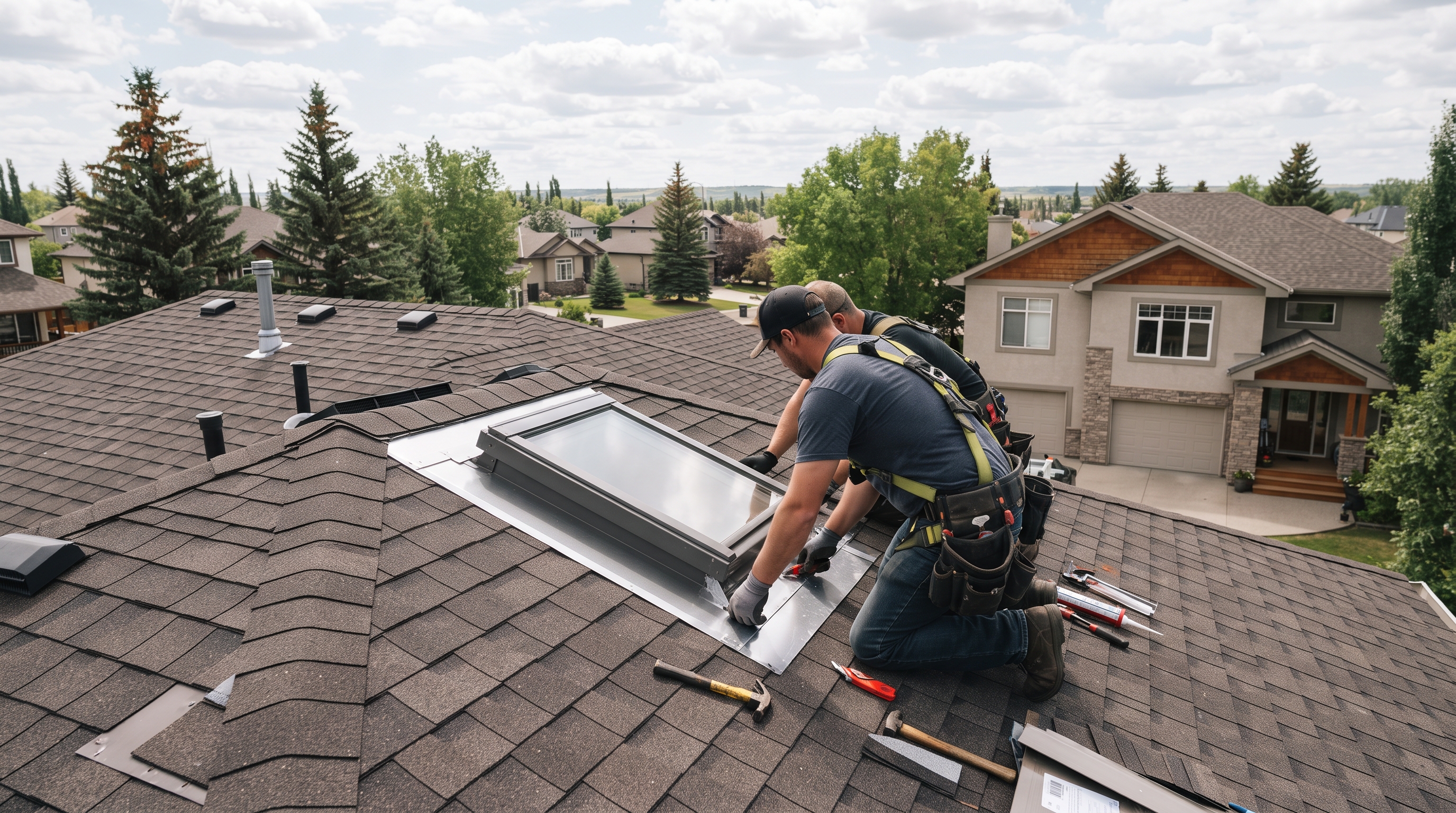
Here's what 22 years and 1,500+ roofs across Parkland County have actually taught us: the right answer depends on your home, your budget, and how long you plan to stay. We install both materials every single week, and as an [IKO Preferred Contractor](/services/shingling) with extensive [metal roofing experience](/services/metal-products), we have no financial incentive to push you toward one over the other.
This guide gives you the honest numbers — the real costs, the actual performance data in Alberta's climate, and the scenarios where each material makes sense.
Metal vs. Asphalt: Head-to-Head Comparison
| Material | Lifespan | Cost/Sq Ft | Hail | Wind | Maintenance | Score |
|---|---|---|---|---|---|---|
| Standing Seam Metal | 40-70 years | $12.00 - $18.00 | Excellent | Up to 240 km/h | Very Low | 92 |
| Architectural Asphalt Shingles | 20-30 years | $4.50 - $7.00 | Moderate | Up to 210 km/h | Low | 75 |
Upfront Cost vs. Lifetime Cost — The Numbers That Matter
Let's start with the number everyone asks about first: What does it cost?
For a typical 1,500 sq ft roof in Stony Plain (roughly 17-20 roofing squares), here's what you're looking at in 2026:
Asphalt Shingles (Architectural Grade)
- Materials + labour: $8,000 - $14,000
- Average in Parkland County: ~$11,000
- Expected lifespan: 20-30 years (realistically 22-25 in Alberta's climate)
Standing Seam Metal Roofing
- Materials + labour: $22,000 - $35,000
- Average in Parkland County: ~$28,000
- Expected lifespan: 40-70 years (we've seen 60+ year metal roofs in the region still performing)
That's a significant upfront difference — metal costs roughly 2.5x more. But here's where the math gets interesting.
The 50-Year Cost Comparison
Over 50 years of protecting your home:
- Asphalt route: 2 full replacements = ~$22,000 + inflation + 2x tear-off/disposal costs. Realistic total: $28,000 - $35,000
- Metal route: 1 installation = ~$28,000 + zero additional roofing costs. Realistic total: $28,000
When you factor in the second tear-off, disposal fees (which are rising in Alberta due to landfill restrictions), and the disruption of a second major renovation, metal actually costs the same or less over the life of the home.
The annual cost of protection:
- Asphalt: approximately $440 - $520/year
- Metal: approximately $400 - $510/year
The cost-per-year gap has narrowed significantly as asphalt shingle prices have increased 35-40% since 2022 due to petroleum and supply chain pressures, while metal pricing has remained relatively stable.
Annual Cost of Protection: The Real Comparison
When you stop comparing sticker prices and start comparing what each material costs per year of actual protection, the gap between metal and asphalt nearly disappears.
Durability in Alberta's Climate — Where Metal Pulls Ahead
Alberta is one of the hardest climates on roofing materials in North America. Here's how that affects your choice:
Hail Performance
Alberta is Canada's hail capital. The Edmonton-Red Deer corridor sees severe hail events almost every summer, and Parkland County is right in the crosshairs.
- Asphalt shingles: Even Class 4 impact-rated shingles (the highest rating) can sustain bruising and granule loss from large hail. A severe hailstorm can take 5-10 years off your roof's lifespan. We see hail-damaged asphalt roofs weekly during summer inspections.
- Standing seam metal: Dents but doesn't crack, split, or lose protective coating. Cosmetic damage occurs in extreme events, but the roof remains functionally waterproof. We've inspected metal roofs after storms that destroyed neighbouring asphalt roofs — the metal was dented but still performing perfectly.
Wind Resistance
Chinook winds regularly hit 100-120 km/h in Parkland County, with gusts exceeding 150 km/h recorded multiple times.
- Asphalt: Rated to 210 km/h when properly installed, but adhesive strips degrade over time. Older shingles (10+ years) are significantly more vulnerable to wind uplift.
- Metal: Mechanically locked panels rated to 240 km/h with no degradation over time. The interlocking seam design actually gets stronger under wind load.
Freeze-Thaw Cycling
Alberta experiences extreme temperature swings — we can go from -30°C to +5°C in a single chinook event. This freeze-thaw cycling is brutal on all roofing materials.
- Asphalt: Expands and contracts, gradually cracking and curling the shingles. This is the #1 reason Alberta roofs underperform their rated lifespan.
- Metal: Engineered with expansion joints and floating clip systems that accommodate thermal movement without stress. No degradation from cycling.
Snow Load and Ice Damming
- Asphalt: Holds snow, which can create ice dam conditions if attic ventilation is inadequate. Ice dams force water under shingles and into your home.
- Metal: Smooth surface sheds snow naturally. When combined with proper [soffit and fascia ventilation](/services/soffits-fascia), ice dams are virtually eliminated.
Aesthetics and Curb Appeal — Modern Metal Has Changed the Game
If your mental image of a metal roof is a barn or an industrial building, it's time for an update.
Modern standing seam metal roofing is one of the most architecturally striking options available. We've installed metal roofs on luxury acreages in Parkland County, contemporary homes in Spruce Grove, and heritage-style houses in Stony Plain — and they all look stunning.
Available styles:
- Standing seam (the clean, modern look with vertical lines)
- Metal shingles (mimics the appearance of traditional shingles or slate)
- Board-and-batten panels for accent walls and facades
- Custom colour matching from over 40 factory-finished colours
Asphalt's advantage: Asphalt architectural shingles offer a dimensional, textured appearance that suits traditional home styles. The colour selection is massive, and the look is familiar and universally appealing. If your home has a classic Alberta bungalow aesthetic, asphalt may complement the architecture more naturally.
Metal's advantage: For modern, contemporary, or farmhouse-style homes, nothing beats the clean lines of standing seam. Metal also ages beautifully — the factory-applied coatings maintain their colour for decades, while asphalt shingles gradually fade.
Check out our [gallery](/gallery) to see recent metal and asphalt installations side by side across Parkland County.
Resale Value and Insurance Savings
Resale Value
According to the [Canadian Real Estate Association](https://www.crea.ca/), a new roof is one of the top 3 renovations for return on investment. But the type of roof matters:
- Asphalt roof replacement: Typically recoups 60-70% of cost at resale
- Metal roof installation: Typically recoups 85-95% of cost at resale, and can increase home value by 1-6% beyond the cost of the roof itself
The reason is simple: buyers know they won't have to think about the roof for decades. A home listing that says "new 50-year metal roof" is a powerful selling point.
Insurance Savings
This is where metal roofing delivers a genuine financial advantage that most homeowners don't know about.
Many Alberta insurance providers — including Intact, Wawanesa, and TD Insurance — offer premium discounts for metal roofs due to their superior hail and fire resistance. Typical savings:
- 5-15% reduction in annual home insurance premiums
- On a $2,000/year policy, that's $100-$300/year in savings
- Over 50 years: $5,000-$15,000 in cumulative insurance savings
Combined with the elimination of a second roof replacement, this tips the lifetime cost calculation firmly in metal's favour for homeowners who plan to stay in their homes long-term.
*Pro tip: Ask your insurance provider about their metal roof discount BEFORE you make your decision. Some providers offer larger discounts than others, and this can significantly affect your ROI calculation.*
Debunking the Noise Myth (and Other Common Concerns)
We hear the same objections to metal roofing regularly. Let's address them with facts:
"Metal roofs are noisy in the rain"
This is the #1 myth. In the 1970s and 80s, metal roofs were installed directly over purlins with no solid decking beneath. Yes, those were loud. Modern standing seam installations go over solid plywood decking, ice and water shield, and synthetic underlayment — the same layers under asphalt shingles. The noise level is identical. In fact, some studies from the [Metal Roofing Alliance](https://www.metalroofing.com/) show metal roofs can be *quieter* due to their rigidity.
"Metal roofs attract lightning"
False. Metal roofs do not increase the likelihood of a lightning strike. Lightning hits the tallest point in an area regardless of material. If metal roofs did attract lightning, every steel-framed commercial building in Edmonton would be hit constantly. And if lightning does strike, metal is actually safer — it disperses the energy and won't catch fire.
"Metal roofs dent easily"
Partially true, but misleading. Extreme hail can dent metal panels cosmetically. However, the dents don't affect waterproofing or structural integrity. An asphalt roof hit by the same hail will have cracked shingles, lost granules, and compromised waterproofing. We'll take a dent over a leak any day.
"You can't walk on a metal roof"
You can walk on standing seam metal with proper footwear and technique. We do it during every installation and inspection. That said, routine maintenance requirements are so low that you'll rarely need to be up there.
"Metal roofs are too hot in summer"
Actually the opposite. Metal roofs with reflective coatings (which is most modern metal roofing) reflect significantly more solar radiation than asphalt. This means lower attic temperatures and reduced cooling costs in summer. The [National Research Council Canada](https://nrc.canada.ca/) has published data showing reflective metal roofs can reduce cooling energy use by 10-25%.
When Asphalt Shingles Are the Right Choice
Despite metal's long-term advantages, asphalt shingles are absolutely the right choice in certain scenarios:
Choose asphalt if:
- You're selling within 10 years — You won't recoup the metal premium. A quality asphalt roof looks great and adds value without the higher upfront cost.
- Your budget is under $15,000 — If the choice is between a quality asphalt installation and a bargain-basement metal installation, go with asphalt every time. A poorly installed metal roof is worse than a well-installed asphalt roof.
- Your roof is complex — Roofs with many dormers, valleys, hips, and penetrations are significantly more expensive to do in metal. The cost premium jumps from 2.5x to 3-4x on complex geometries.
- Your neighbourhood has HOA restrictions — Some older Stony Plain and Spruce Grove neighbourhoods have architectural guidelines that favour traditional roofing appearances.
- You're re-roofing a rental property — The lifetime value calculation is different for investment properties. Asphalt offers the best cost-to-function ratio for rentals.
Choose metal if:
- This is your forever home — The lifetime economics overwhelmingly favour metal for 25+ year ownership
- You're on an acreage — Larger roofs amplify the maintenance and replacement savings
- You're building new — Installing metal during new construction is more cost-effective than retrofitting
- Hail damage is a recurring problem — If you've already had one or two insurance claims, metal eliminates future claims
- You want to maximize resale value — Metal is a premium feature that buyers will pay for
For a deeper look at how different materials compare across all categories, read our complete [guide to roofing materials for Alberta homes](/blog/roofing-materials-guide-alberta).
How Thermal Imaging Changes the Decision
Here's something most roofing contractors can't offer: before you choose your material, we can show you exactly what's happening under your current roof.
As one of the only contractors in Parkland County with [FLIR Level II Thermal Imaging certification](/blog/thermal-imaging-saves-money), we use infrared cameras to detect:
- Hidden moisture trapped in your roof deck or insulation
- Heat loss patterns that indicate ventilation or insulation failures
- Structural issues invisible to the naked eye
Why does this matter for the metal vs. asphalt decision? Because if your roof deck has moisture damage, that needs to be addressed regardless of what material goes on top. And if your attic has significant heat loss issues, a metal roof's reflective properties combined with proper [soffit and fascia ventilation](/services/soffits-fascia) will deliver dramatically better energy performance than asphalt.
We include a thermal scan with every roof assessment at no additional charge. It's one of the reasons our customers say they got advice they couldn't get anywhere else.
Frequently Asked Questions
Get an Honest, Side-by-Side Quote for Both Materials
We'll inspect your roof with thermal imaging, assess your deck condition, and provide detailed quotes for both metal and asphalt — so you can compare apples to apples. No pressure, no sales pitch.