Alberta is the hail damage capital of Canada. The Insurance Bureau of Canada reports that Alberta accounts for roughly 70% of all insured catastrophic losses in the country, with hail being the leading cause. In 2024 alone, hail events across the Edmonton corridor caused over $1.2 billion in insured damage.
If you're a homeowner in Stony Plain, Spruce Grove, or Parkland County, it's not a question of *if* your roof will sustain hail damage — it's *when*.
When that storm hits, what you do in the first 48 hours determines whether your claim goes smoothly or becomes a months-long headache. After handling hundreds of storm damage claims across Parkland County over 22 years, here's exactly what we tell our clients — step by step.
*Internal links: If you're unsure whether your roof is already compromised before storm season, review the [7 warning signs your roof needs replacement](/blog/signs-roof-needs-replacement-stony-plain) or check what [roofing materials best resist hail](/blog/roofing-materials-guide-alberta).*
Step 1: Document the Damage Immediately (The First 48 Hours Are Critical)
The single biggest mistake homeowners make is waiting too long to document damage. Here's what to do the moment the storm passes:
From the Ground (Do This First)
- Walk the perimeter of your home and photograph everything: dented gutters, cracked siding, damaged window screens, dented downspouts, and any visible shingle damage
- Take wide-angle photos that show the full roof from each side of the house
- Photograph your neighbours' roofs if they have visible damage — this establishes the storm's impact zone
- Check and photograph any outdoor items: AC units, vehicles, patio furniture, fences, sheds
Important: Use your phone's timestamp
- Make sure your phone's date/time stamp is visible in photo properties
- Take a video walkthrough narrating what you see
- Email the photos to yourself immediately — this creates a time-stamped backup
Do NOT Climb on Your Roof
- Hail-damaged shingles are slippery and structurally compromised
- Temporary tarping should only be done by a professional if there's active leaking
- Your photos from the ground plus a professional inspection are all your insurance company needs
Inside Your Home
- Check your attic for daylight, moisture, or staining
- Photograph any ceiling stains, wall moisture, or dripping
- Note any new sounds during rain (dripping, running water)
*Pro tip: If you have a [thermal imaging inspection](/blog/thermal-imaging-saves-money) from before the storm, that becomes powerful evidence of new damage vs. pre-existing conditions. This is one reason we recommend scheduling an inspection before storm season.*
Step 2: Contact Your Insurance Provider (Not Your Contractor)
This is critical: call your insurance company before you call a contractor. Here's why:
Insurance companies look for any reason to minimize claims. If you get a contractor up on your roof before the adjuster visits, the insurance company can argue that the contractor caused additional damage or that you authorized work before the claim was approved.
How to file your claim:
1. Call your provider's claims line (not your regular agent). Major Alberta providers and their claims lines:
- Intact Insurance: 1-866-464-2424
- Wawanesa: 1-844-929-2637
- TD Insurance: 1-866-454-8910
- AMA Insurance: 1-800-615-5897
- Aviva: 1-866-692-8482
2. Have this information ready:
- Policy number
- Date and approximate time of the storm
- General description of damage observed
- Whether you have temporary water intrusion (this may escalate your claim priority)
3. Ask these specific questions:
- "What is my deductible for wind/hail damage?" (Most Alberta policies: $1,000 - $2,500)
- "Is there a time limit for filing this claim?"
- "Will you send an adjuster, or do I need an independent inspection?"
- "Does my policy cover full replacement or depreciated value?" (This is crucial — see below)
ACV vs. RCV — The Difference That Costs Thousands
- Actual Cash Value (ACV): Pays replacement cost minus depreciation. A 15-year-old roof will be depreciated significantly, meaning your payout could be 40-60% of replacement cost.
- Replacement Cost Value (RCV): Pays the full cost to replace your roof with equivalent materials. This is what you want, and most modern Alberta policies include it — but verify.
If you have an ACV policy and your roof is older, the insurance payout may not cover a full [roof replacement](/services/roof-replacement). This is worth knowing before the storm hits so you can upgrade your policy.
Step 3: Get a Professional Roof Inspection (Before the Adjuster Arrives)
Once your claim is filed, schedule a professional inspection with a reputable local contractor. This serves two purposes:
1. You get an accurate damage assessment that you can compare against the adjuster's findings
2. You have a professional estimate that supports your claim if the adjuster undervalues the damage
What a proper hail damage inspection includes:
- Systematic grid inspection of every roof face
- Documentation of impact marks, cracked shingles, and compromised flashing
- Assessment of [gutters, soffits, and fascia](/services/soffits-fascia) damage
- Interior inspection for moisture intrusion
- Photographic evidence with measurements
- Written report with repair/replacement recommendation
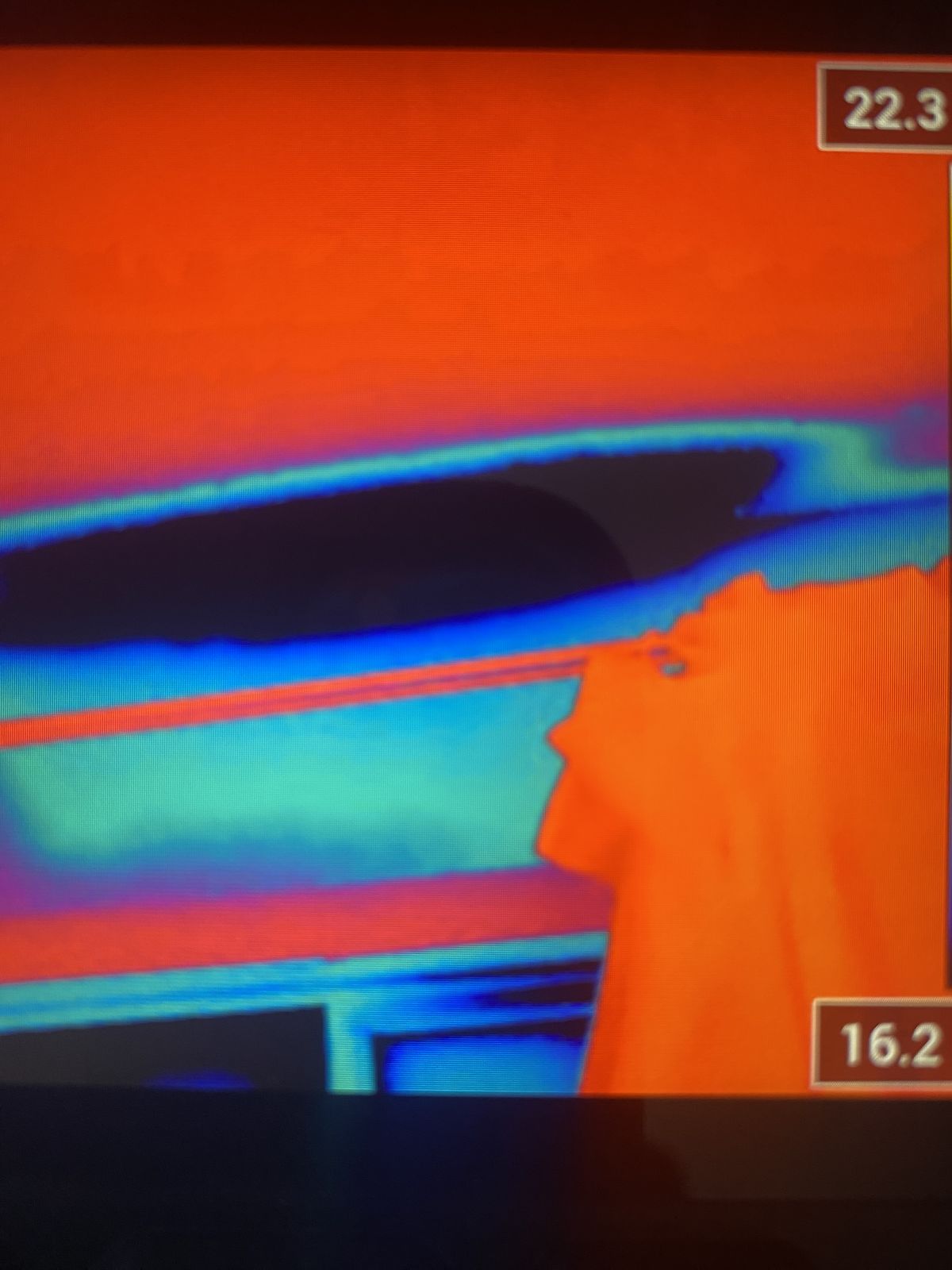
At Kayan Contracting, we include thermal imaging in our storm damage inspections. Our [FLIR Level II certified](/blog/thermal-imaging-saves-money) cameras detect moisture that's already penetrated beneath the shingles — damage that's invisible to the naked eye but critical for your claim. This has helped dozens of our clients get full replacement coverage instead of patch repairs.
Important: A legitimate contractor will inspect your roof for free and provide a detailed report. If anyone asks for money upfront before your claim is settled, walk away.
When the adjuster arrives:
- Be present for the inspection
- Share your ground-level photos and interior documentation
- Ask the adjuster to explain their findings on each roof face
- Take notes on everything they say
- Request a copy of their report before signing anything
Step 4: Understanding What Your Claim Covers (and What It Doesn't)
Alberta home insurance policies generally cover sudden and accidental damage from hail, wind, and storms. But there are important exclusions and limitations:
Typically Covered:
- Shingle replacement (matching existing or full roof if damage exceeds 30-50% of surface)
- Damaged flashing, vents, and roof accessories
- Water damage to interior caused by storm-created openings
- Damaged gutters, downspouts, and [soffits/fascia](/services/soffits-fascia)
- Emergency tarping and temporary repairs
- Removal and disposal of old materials
Typically NOT Covered:
- Pre-existing damage or normal wear and tear
- Damage from lack of maintenance (blocked gutters, missing caulking)
- Cosmetic-only damage that doesn't affect function (this is increasingly contested)
- Upgrades beyond replacing what was there (you can't claim for metal if you had asphalt — but you CAN pay the difference yourself)
- Landscaping and tree damage (usually separate coverage)
The Depreciation Hold-Back
Many RCV policies work in two stages:
1. Initial payout: The replacement cost minus depreciation (this is your ACV amount minus deductible)
2. Recoverable depreciation: Once repairs are completed and you submit invoices, the insurance company releases the remaining funds
This means you may only receive 50-70% of the total claim upfront. The rest comes after you complete the work. This is normal — don't let it surprise you.
Alberta-Specific Deductible Considerations
After the costly hail seasons of 2020-2024, many Alberta insurers have increased hail-specific deductibles. It's now common to see:
- $1,000 — Standard on older policies
- $2,500 — Increasingly common on new and renewed policies
- Percentage-based — Some policies use 2-5% of dwelling value (on a $500,000 home, that's $10,000-$25,000)
Check your policy NOW, before the next storm. If you have a percentage-based hail deductible, you may want to negotiate a flat deductible at renewal.
Step 5: Beware of Storm Chasers (The Biggest Threat After the Storm)
Within 24-48 hours of a major hailstorm, your doorbell will ring. Trucks with out-of-province plates will be parked on your street. People with clipboards will offer "free inspections" and pressure you to sign contracts.
These are storm chasers, and they are the single biggest financial risk you face after a hail event.
Storm chasers are roofing crews — often from the United States or other Canadian provinces — that follow weather patterns and descend on hail-damaged communities en masse. They're here for your insurance money, not to protect your home.
Red flags to watch for:
- Door-to-door solicitation within days of a storm
- Company trucks with out-of-province plates or magnetic signs
- Pressure to sign an "Assignment of Benefits" (AOB) or "Direction to Pay" before your claim is even filed
- Offering to "cover your deductible" (this is insurance fraud in Alberta)
- No local address, just a phone number
- Cannot provide an Alberta business license or WCB coverage letter
- Demanding a deposit before work begins
Why storm chasers are dangerous:
1. Quality: They use the cheapest materials and rush through installations. We've torn off storm-chaser roofs that were less than 2 years old because they were failing.
2. Warranty: They leave town after the season. When your roof leaks in January, that 1-800 number won't answer.
3. Insurance fraud: Offering to "waive your deductible" inflates the claim and constitutes insurance fraud. If your insurer discovers this, they can void your entire claim — and your policy.
4. Licensing: Many aren't properly licensed or insured in Alberta. If a worker is injured on your property and they don't have WCB, YOU are liable.
How to protect yourself:
- Only work with contractors who have been in your community for years. Kayan Contracting has been in Stony Plain for 22 years — we're not going anywhere.
- Verify WCB coverage through [Alberta WCB's online verification tool](https://www.wcb.ab.ca/insurance-and-premiums/clearance-letters.html)
- Check BBB ratings (we maintain an A+ rating through the [Better Business Bureau](https://www.bbb.org/))
- Ask for local references you can actually visit
- Read your contract carefully — never sign an Assignment of Benefits
For a comprehensive guide on vetting roofing contractors, read our detailed post on [how to choose a roofing contractor in Stony Plain](/blog/choose-roofing-contractor-stony-plain).
Step 6: Timeline Expectations — What to Expect and When
After a major hailstorm in Parkland County, here's a realistic timeline:
Week 1: Documentation and Filing
- Document damage (Day 1)
- File claim (Day 1-2)
- Schedule professional inspection (Day 2-3)
- Receive professional inspection report (Day 3-7)
Weeks 2-4: Adjuster and Approval
- Insurance adjuster visits (typically 1-3 weeks after filing, longer after major events)
- Adjuster report generated (1-2 weeks after visit)
- Claim approved and initial payout issued (1-2 weeks after report)
Weeks 4-8: Scheduling and Completion
- Contractor schedules work (depends on storm volume — after major events, quality contractors book 4-8 weeks out)
- Roof replacement completed (1-3 days for asphalt, 3-5 days for metal)
- Final invoice submitted to insurance for recoverable depreciation
- Remaining funds released (2-4 weeks after invoice submission)
Total timeline: 2-4 months from storm to completed roof, assuming no disputes.
If Your Claim Is Denied or Underpaid
This happens more often than it should. If you believe your claim was undervalued:
1. Request a detailed written explanation of the denial/reduction
2. Get a second independent inspection
3. File a formal dispute with your insurer
4. Contact the [Alberta Superintendent of Insurance](https://www.alberta.ca/superintendent-of-insurance) if you believe the denial is unjust
5. Consider a public adjuster — they work for you, not the insurance company (they typically charge 10-15% of the settlement)
Do NOT accept the first offer as final if it doesn't cover legitimate damage. Insurance companies expect negotiation on significant claims.
Frequently Asked Questions
Storm Damage? We'll Inspect Your Roof for Free
Kayan Contracting has handled hundreds of insurance claims across Parkland County. We'll document the damage with thermal imaging, provide a detailed report for your insurer, and guide you through every step. 22 years local. A+ BBB. Zero pressure.